
Workplace flexibility is one of those things people underestimate until life forces them to rely on it. The conversation usually stays surface-level: no commute, better balance, more control over your day. All true. All beside the point.
Flexibility isn’t just convenience. Sometimes it’s what lets you keep working when life goes sideways.
I learned that in a very literal way last year.
The Setup: A Puppy, Then a Broken Ankle
I already had a new puppy at home, which, if you’ve been through that stage, needs no further explanation. Constant energy. Zero awareness of personal space. A deep, unwavering commitment to being underfoot at all times.
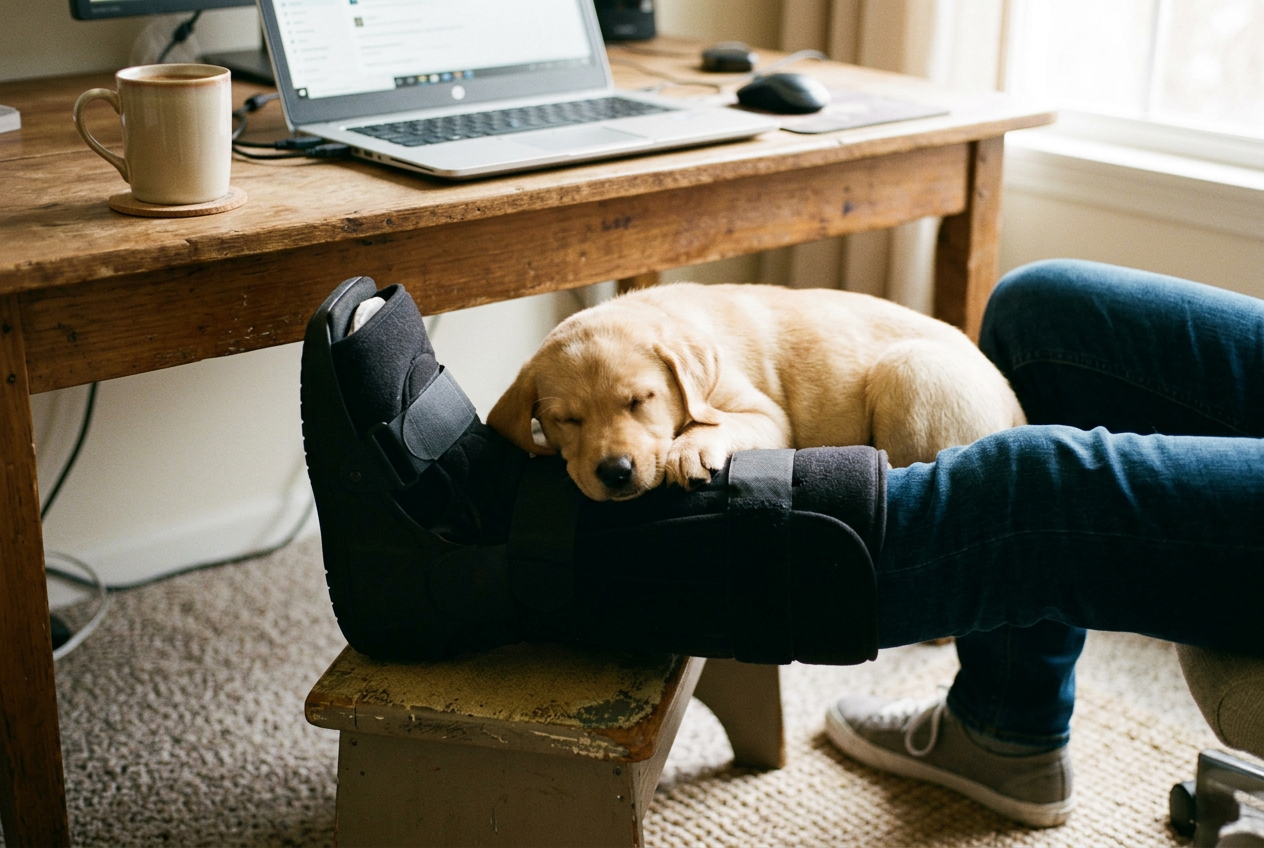
Then one day I broke my ankle trying to jump over her so I wouldn’t land on her. I chose the puppy over my own footing and lost that argument immediately.
Suddenly, my life looked like this:
- New puppy with no concept of “recovery mode”
- A broken ankle and a boot cast
- No comfortable way to drive my standard vehicle
- Basic errands replaced entirely by Uber Eats
- Crutches, chaos, and a dog who still wanted to play at full speed
On their own, any one of these would have been manageable. Together, it was a lot.
The Part That Surprised Me
What stood out most wasn’t the physical side of it. It was the mental load. The constant effort of keeping life moving while everything at home was harder than normal.
That’s where work surprised me.
Because I work in a fully remote setup with Virtira, I could still show up to meetings, keep projects moving, and stay present, without adding the stress of commuting or figuring out how to physically get into an office. That might sound like a small thing. At the time, it wasn’t. It didn’t make recovery easier. But it removed one layer of pressure at a moment when I had no capacity for more.
What Remote Work Actually Requires and What It Gives Back
This is where I think the remote vs. in-office debate usually misses the point. People frame it as binary: either remote work is the ideal, or everyone belongs back in an office.
Real life isn’t that tidy.
What made the difference during that period wasn’t the absence of an office. It was the presence of trust. There was no pressure to perform visibility: to be seen working because I happened to be at home. The focus stayed where it belonged: on outcomes, clear communication, and accountability.
When you’re trusted that way, you show up differently:
- You focus on delivery, not optics. The work either gets done or it doesn’t, and you own that.
- You communicate more deliberately. When you can’t rely on physical presence to signal effort, words have to do that work.
- You stay consistent, not because you have to, but because you want to. That’s a different kind of motivation.
Honestly, I was probably more consistent during that stretch than I would have been otherwise.
What I’d Tell Anyone Who Still Sees Flexibility as a Perk
Before all this, I probably viewed flexibility as a nice benefit, something that makes work more comfortable. Now I see it differently.
Sometimes flexibility is what makes it possible to keep working at all.
Looking back, I can laugh at the sequence: new puppy, a badly timed leap, crutches, a boot cast, and a lot of Uber Eats. At the time, it didn’t feel funny. What it gave me was a clearer understanding of what flexibility means when it’s real, not just a line in a policy document.
Remote work isn’t perfect. It requires discipline, strong communication, and clear expectations. But it also creates space when people need it most.
That’s what I genuinely appreciate about how Virtira operates. The focus isn’t on watching people work. It’s on enabling them to deliver wherever they are, whatever is going on in their lives.
That made a real difference. And I don’t take it lightly.