
Ten years ago, if you’d told me I would thrive working remotely, I probably wouldn’t have believed you.
I’d spent almost two decades in the hotel industry: a career built entirely around people, events, fast-paced environments, and constant interaction. Then life changed. Our family grew, we moved to a new country, and I stepped away from hospitality to take a role with a small local business. The people were lovely, the coastal commute was hard to complain about, and the role was comfortable. But comfortable wasn’t quite enough.
Then a friend spotted a remote job posting and encouraged me to apply.
I remember looking at the company website thinking it seemed polished, modern, and honestly a little intimidating. They’d been operating remotely for around five years before I joined, back when remote work was still far from mainstream. I also wouldn’t have described myself as particularly tech-savvy at the time, which made the whole idea feel even further outside my comfort zone.
But I applied anyway. That decision ended up shaping my life more than I expected.
Learning How to Work Remotely
It didn’t take long to realize how different remote work actually was. There was no turning to the person beside you to ask a quick question. The learning curve was real.
The role evolved quickly as roles tend to do in smaller remote organizations where everyone wears multiple hats. I’d always known I was a strong coordinator and organizer, and those skills started getting recognized early. Within my first year, I was coordinating a leadership retreat: flights, accommodations, logistics, schedules, all the moving pieces, managed entirely remotely. I also got to attend the retreat myself, which felt surreal given where I’d started only months earlier.
One minute I was working in a small office in a rural community. The next, I was coordinating leadership events with team members spread across Canada.
I discovered something important about myself: I genuinely enjoy organizing chaos into structure.
The early days were also overwhelming. Constant Teams pings, virtual meetings, new tools, new processes. My brain felt overloaded more often than I’d like to admit. I’ve always been a note-taker, but during those years I wrote down everything. Processes, reminders, meeting notes, follow-ups, system details. The volume of handwritten notes became a running joke between me and my manager, especially on the occasional office day when I’d arrive carrying pages and pages of them.
At the time, those notes genuinely helped me survive. Strong support from my manager helped too, and I’m grateful for both.
Remote Work Is More Human Than People Think
As time went on, something interesting started happening.
Even though the company was fully remote, it never felt disconnected. There were still opportunities to bring people together, build relationships, and create shared experiences. Our local team got together regularly for BBQs, golf events, meetups, photo shoots. In many ways, remote work made those moments feel more intentional, because people actively chose to create them rather than simply defaulting to proximity.
The human side of work didn’t disappear. It just looked different.
Discovering How I Work Best
What surprised me most was realizing how much I actually enjoy working this way.
I’d always assumed I was extroverted. My whole hospitality background pointed that direction. But remote work revealed something more nuanced. I still enjoy social interaction and bringing people together, but I focus far better without the constant interruptions and background noise that come with open offices. Most of us are probably more mixed than we think.
In our earlier years, our team occasionally worked together in person one day a week. After COVID, we briefly revisited the idea. But over time, we all quietly came to the same conclusion: it simply wasn’t necessary. We genuinely got more done working remotely. That realization surprised me more than almost anything else.
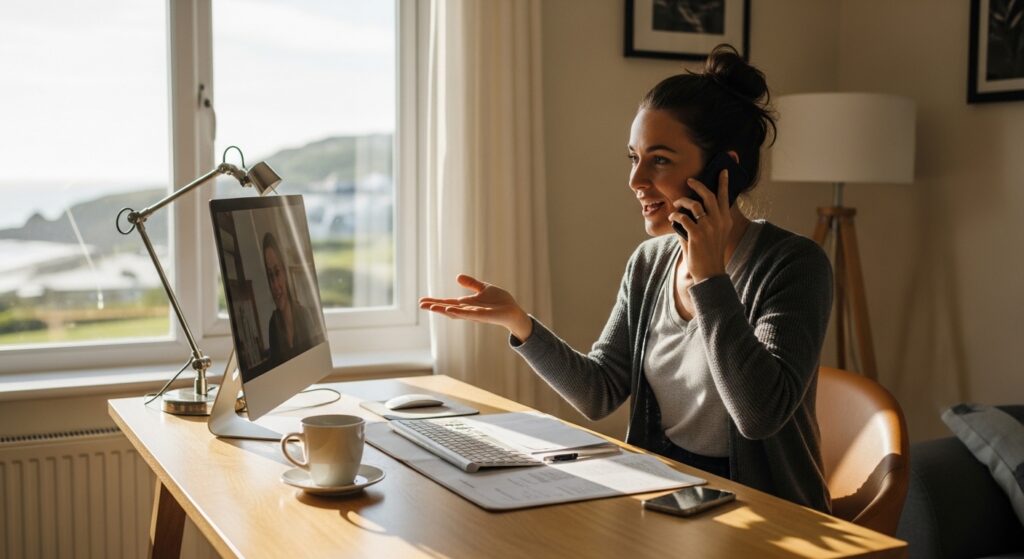
Remote work also gave me a daily rhythm I didn’t know I was missing. An early morning walk or run, seeing my son off to school, watching him catch the bus, and still starting the workday feeling focused. If something needs finishing, I can stay on a little later, knowing the next morning doesn’t begin with a commute.
It also taught me the importance of boundaries. There’s a real difference between working from home and living at work. Over time I learned to shut the computer down, close the office door, and mentally switch off. That balance matters more than people realize and it doesn’t happen automatically.
Looking Back
Years later, I still find it ironic that the thing I was most unsure about became one of the best career decisions I ever made.
Remote work didn’t make me less connected. It helped me understand, for the first time, the environment where I actually do my best work.